How to Store Sambal, Chilli Oil & Cooking Pastes
“Does this need to go in the fridge?” is the most common kitchen question about spicy jars. The answer depends on the type. Here is a simple guide to storing sambal, chilli oil and spice pastes so they last.
Why storage matters
Two reasons: safety and flavour. Stored right, these jars keep for months; stored wrong — usually because water got in — they can spoil or go rancid. The enemy is almost always moisture and a dirty spoon.
Oil-based: chilli oil & chilli crisp
Oil-based condiments keep well at room temperature in a cool, dark cupboard — no fridge needed. A crunchy garlic chilli oil like Fany’s Crunchy Garlic Chilli Oil with no preservatives lasts for months this way. The rule: always use a clean, dry spoon, and close the lid. If you refrigerate chilli oil it can turn cloudy and solidify — harmless, but it will not pour.
Cooked sambal
It depends on the sambal. Drier, oilier, cooked-down sambals keep at room temperature; fresher or wetter ones are best refrigerated once opened. Always follow the pack. A ready sambal like Sambal Nyet Berapi lists its own storage — check the label and when in doubt, chill it after opening.
Spice pastes (rendang, curry)
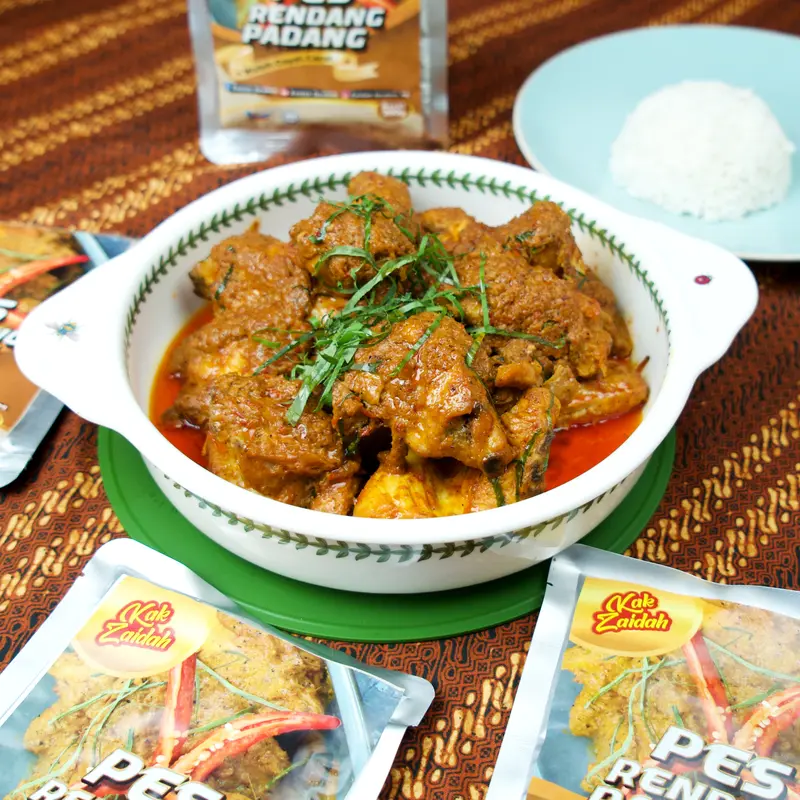
Sealed, a spice paste is shelf-stable at room temperature. Once opened, many are best kept in the fridge or freezer. Kak Zaidah Pes Rendang Padang, for example, is stored at room temperature sealed and in the freezer after opening. Freezing does not hurt the flavour and stops it spoiling.
The golden rules
- Always use a clean, dry spoon — never a wet or used one.
- Wipe the rim and close the lid tightly.
- Keep jars out of direct sunlight and heat.
- Keep water out — moisture is what grows mould.
How to tell if it has gone off
Trust your senses: an off, sour or “fermented” smell, visible mould, or a rancid (stale-oil) smell means throw it out. A little oil separating on top of a paste is normal — just stir it back in.
Quick shelf-life reference
- Chilli oil / crisp (sealed): many months at room temperature.
- Cooked sambal (opened): days to weeks — follow the pack, chill if unsure.
- Spice paste (opened): freeze or refrigerate per the label.
Featured in this guide


Shop these at OmniCart
Everything here is halal and delivered nationwide in 2–3 days, with same-day groceries in KL & PJ.
Start shopping ›