Rendang Padang vs Negeri Sembilan Rendang: What’s the Difference?
“Rendang” is not one dish — it is a family of them. Two styles get talked about most: the dark, dry Padang rendang and the richer Negeri Sembilan style. Here is how they differ, and how to cook a great one at home without the hours of work.
Two famous styles
Across the Malay world you will meet many rendangs, but two dominate the conversation: Padang-style rendang (rendang kering) and the Negeri Sembilan style. They share the same idea — meat cooked slowly in coconut milk and spices — but the result on the plate is quite different.
Where each comes from
Padang rendang traces to West Sumatra and the Minangkabau people, where it is cooked down until almost dry for flavour and keeping quality. Negeri Sembilan shares that Minangkabau heritage — many families there descend from Sumatran migrants — but the local style tends to stay a little wetter and leans on fresh chillies and turmeric leaf.
Flavour and texture: the real difference
- Padang rendang is dark, dry and intense. The sauce reduces right down and coats the meat, with a deep, slightly caramelised, toasty-coconut flavour from kerisik (toasted grated coconut).
- Negeri Sembilan rendang is usually lighter in colour, a touch wetter, and brighter and hotter from fresh chilli and daun kunyit (turmeric leaf).
The spices
Both build on a rempah of shallots, garlic, ginger, galangal (lengkuas), lemongrass (serai) and chilli, simmered in coconut milk with aromatic leaves — turmeric leaf, kaffir lime leaf and often a knot of lemongrass. Padang rendang is defined by cooking long enough for the oil to separate and the kerisik to darken everything.
Which meat suits which?
Classic rendang is beef, and beef suits the long, dry Padang cook because it has time to turn meltingly tender. Chicken rendang cooks faster and stays juicier, which pairs well with a slightly wetter, fresher style — but either meat works with either style; it is about the time you give it.
Why rendang takes time
The magic is patience: the coconut milk slowly splits, the spices toast in that oil, and the sauce goes from pale and loose to dark and clinging. Rushing it gives you a curry, not a rendang. That reduction is also why a proper rendang keeps for days.
The easy way at home
You do not have to grind a dozen spices to get there. A ready paste like Kak Zaidah Pes Rendang Padang has the lengkuas, serai, chilli and kerisik already blended — you brown your meat, stir it in with coconut milk, and simmer. For the full step-by-step, see how to cook rendang the easy way.
How to serve it
Serve either style with nasi putih, nasi minyak, ketupat or lemang. Leftover rendang is arguably better the next day, once the flavours settle — and a drier Padang rendang keeps especially well. Halal.
Featured in this guide
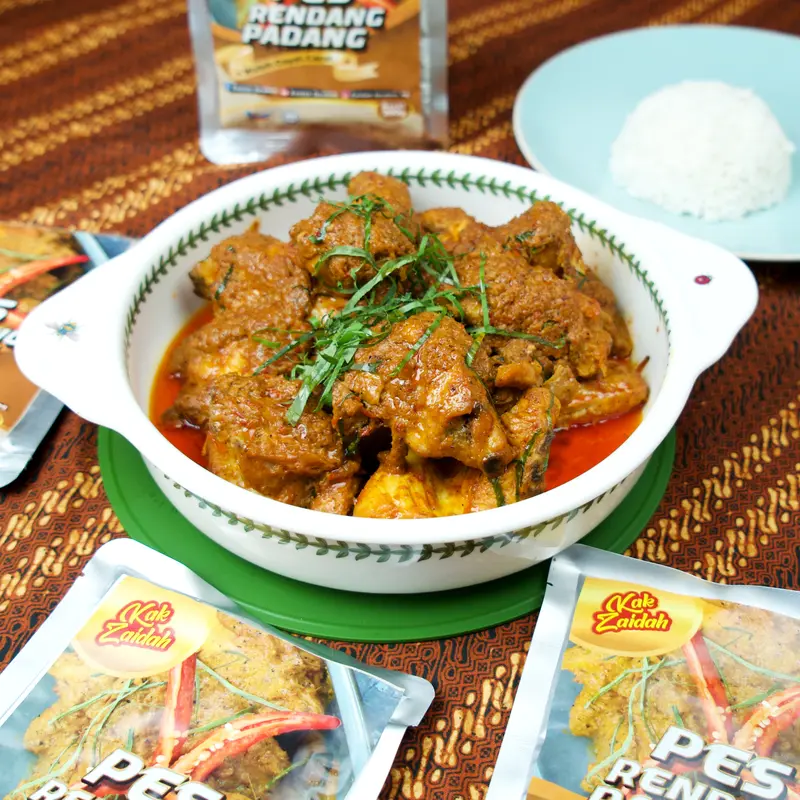
Shop these at OmniCart
Everything here is halal and delivered nationwide in 2–3 days, with same-day groceries in KL & PJ.
Start shopping ›